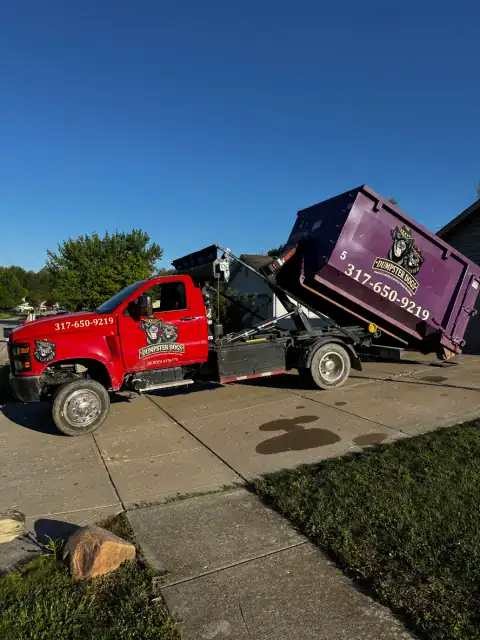

What Does a Dumpster Weigh?
Empty + loaded weight, by size, by material, with real-world examples.
Empty Dumpster Weight by Size
| Size | Empty Weight | Typical Use |
|---|---|---|
| 10-yard | 2,500–3,500 lbs | Garage / small remodel |
| 16-yard (ours) | 3,500–4,500 lbs | Whole-home cleanout, roof, remodel |
| 20-yard | 4,000–5,000 lbs | Mid-size construction |
| 30-yard | 5,500–7,000 lbs | Large construction / commercial |
Debris Weight by Material (per cubic yard)
| Material | Weight / yd³ | How fast it hits 2 tons |
|---|---|---|
| Mixed household junk | ~350 lbs | ≈11.4 yards |
| Yard waste / brush | ~400 lbs | ≈10 yards |
| Drywall | ~500 lbs | ≈8 yards |
| Asphalt shingles | ~700 lbs | ≈5.7 yards |
| Wood / lumber | ~300 lbs | ≈13.3 yards |
| Dirt / soil | ~2,200 lbs | ≈1.8 yards |
| Gravel | ~2,800 lbs | ≈1.4 yards |
| Broken concrete | ~4,000 lbs | ≈1 yard |
| Brick | ~3,000 lbs | ≈1.3 yards |
Why Empty Weight Matters
Roll-off trucks have legal axle-weight limits. An empty 16-yard plus a fully-loaded heavy debris load (concrete or dirt) can exceed road weight. That's why most haulers cap inert/heavy material loads at ~10 tons — and why partial loads of dense material are normal and not "wasting space."
How to Estimate Your Load Weight
- Estimate cubic yards of debris (1 pickup-truck bed ≈ 2–3 yd³).
- Multiply by the material density from the table above.
- If result > 2,000 lbs, plan for overage — or split into two loads.
- Mixed loads? Use a weighted average — most household cleanouts land at 2,000–4,500 lbs total.
Dumpster Weight FAQs
How much does a 16-yard dumpster weigh empty?
An empty 16-yard roll-off dumpster weighs roughly 3,500–4,500 lbs (1.75–2.25 tons) depending on steel gauge. The empty weight is the dumpster only — your included weight allowance is for the debris you load.
How much can a 16-yard dumpster hold by weight?
Volume-wise a 16-yard holds about 16 cubic yards of debris. By weight, our standard rental includes a 2-ton (4,000 lb) allowance. Loads above that are charged $95/ton (prorated by the pound) overage.
Why does the weight of my debris matter?
Landfills charge by weight (tonnage), not volume. Dense materials — concrete, brick, dirt, shingles, tile — fill the allowance fast and can trigger overage fees before the dumpster looks full.
What's the heaviest material I can put in a dumpster?
Most haulers cap heavy/inert loads (concrete, brick, dirt, asphalt) at 10 tons per pull for axle-weight safety. We can take those but recommend partial loads — call us first so we can plan.
How do I estimate the weight of my project debris?
Use cubic yards × material density. One yard of mixed household junk ≈ 350 lbs; one yard of asphalt shingles ≈ 700 lbs; one yard of broken concrete ≈ 4,000 lbs; one yard of dirt ≈ 2,000–2,700 lbs. See our weight calculator below for project estimates.
Material-Specific Weight Guides
Ready to Rent a Dumpster?
Book in under 60 seconds. Fast delivery to Hendricks County.
Delivery and pickup times are not guaranteed. We service your scheduled date based on our route and availability. Keep the placement area and dumpster accessible for the full day.
Online bookings are never picked up on Saturday or Sunday. Rentals that would end Sunday are picked up Monday at the same price with one complimentary day; rentals that would end Saturday are picked up Monday for the next one-day rate (normally +$10), with the extra day free. You do not choose an exact pickup time.
No extra-day charge is added merely because Dumpster Dogs arrives later that day or directs a weekend pickup to Monday. Keep the dumpster safely accessible until collected.